

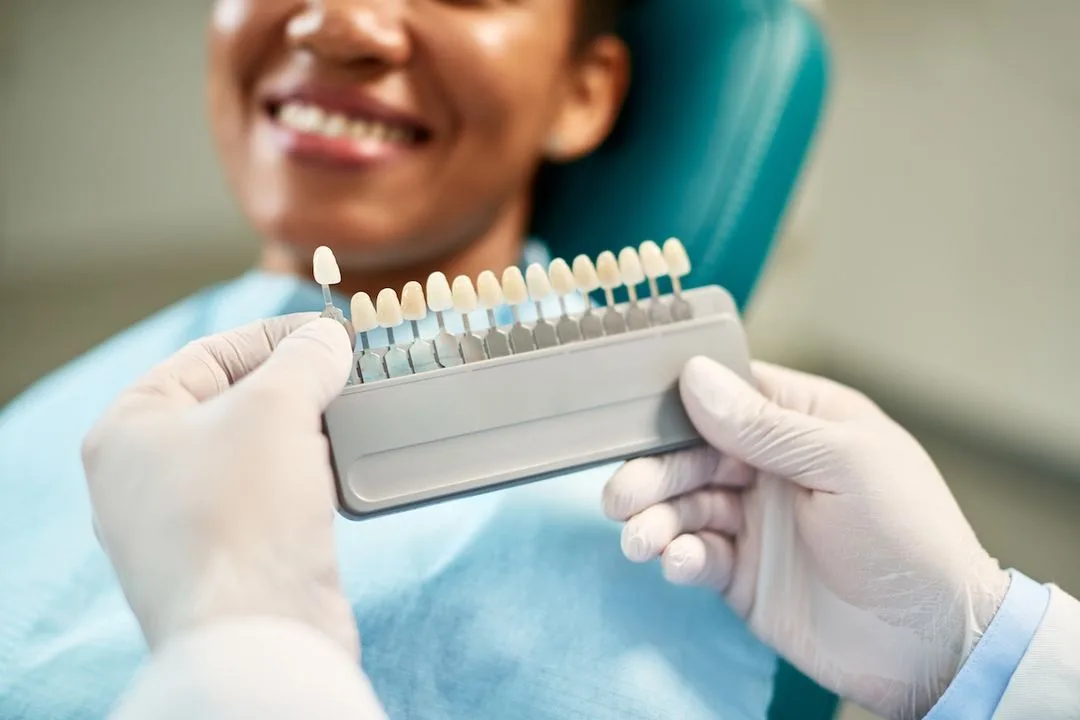
Tooth Replacement
Dental Bridges in Pikesville, MD
Close the gap, restore the bite
Voted Top Dentist by Baltimore Magazine, 2026
A bridge replaces one or more missing teeth by anchoring artificial teeth to the natural teeth beside the gap. Fixed bridges restore your appearance, your ability to chew and speak, and the health of your whole mouth.

Understanding dental bridges
Bridges
All of your teeth play an important role in speaking, chewing and in maintaining proper alignment of other teeth. Tooth loss doesn’t necessarily have to occur as you age, but if you do lose teeth they must be replaced to maintain proper function of your mouth. Fortunately, there are options for correcting tooth loss.
Dental Bridge Options
A bridge, which is a device used to replace missing teeth, attaches artificial teeth to adjacent natural teeth, called abutment teeth. Bridges are either permanently attached (fixed bridges), or they can be removable.
Fixed bridges are applied by either placing crowns on the abutment teeth or by bonding the artificial teeth directly to the abutment teeth. Removable bridges are attached to the teeth with metal clasps or by precision attachments.
If you’re missing one or more teeth, you may be aware of their importance to your appearance and dental health. Your teeth work together for many daily functions from eating to speaking. With missing teeth, its difficult to do these things. Missing teeth can and should be replaced. Fixed bridges are a great way to restore your dental health and appearance.
What exactly is a bridge or fixed partial denture?
A bridge (fixed partial denture) is a device which fills the gap where teeth are absent. Fixed bridges are bonded into place and can only be removed by a dental professional. Removable bridges, as the name implies, can be taken out and cleaned. Fixed bridges offer more stability than their removable counterparts.
How is a bridge attached?
The attachment procedure usually takes two or three appointments to complete. At the first appointment the doctor will prepare the teeth on either side of the gap by removing a portion of the enamel and dentin.
Since the bridge must be fabricated very precisely to ensure correct bite and to match the opposing tooth, impressions of the teeth are taken and sent to a lab where the bridge will be constructed.
Fixed bridges are typically cemented to the natural teeth next to the space left by the missing tooth. A pontic (false tooth) replaces the lost tooth. Crowns, which are cemented onto the natural teeth, provide support for the bridge.
What materials are used?
Bridges can be constructed from gold alloys, non-precious alloys, porcelain, or a combination of these materials. Porcelain is often bonded to either precious or non-precious metal.
How do I take care of my bridge?
A strict regimen of brushing and flossing will keep the bridge and surrounding teeth clean. This is of critical importance as the bridge relies on the neighboring teeth for support.
For Pikesville patients who are not candidates for an implant, a fixed bridge is a reliable, long-established way to restore a missing tooth. Our doctors will help you weigh a bridge against an implant based on the health of the teeth beside the gap.
Watch
See dental bridges explained
Why patients choose them
The benefits of dental bridges
Restores your bite
A bridge restores your ability to properly chew and speak and keeps your remaining teeth from drifting out of position.
Supports your face
A bridge helps support your lips and cheeks, so your mouth does not sink and your face does not look older.
Protects oral health
Replacing missing teeth reduces the unusual stresses on your gums and lowers the increased risk of gum disease that follows tooth loss.
Stable and durable
Fixed bridges are bonded into place, offering more stability than removable options and lasting for years with good care.
What to expect
The dental bridges process
- 01
Prepare the teeth
The doctor prepares the abutment teeth on either side of the gap by removing a portion of the enamel and dentin.
- 02
Impressions
Precise impressions are taken and sent to a lab so the bridge is built to fit your bite and match the opposing tooth.
- 03
Fabrication
The lab constructs the bridge, with a pontic, or false tooth, to replace the lost tooth and crowns to support it.
- 04
Cementation
The finished bridge is cemented onto the natural teeth next to the space, completing your restoration.
From Our Blog
Learn more about dental bridges
Common Questions
Dental Bridges questions
Not seeing your question? Call the office at (410) 594-9500 and someone will actually pick up.
Patient Reviews
What our dental bridges patients say
“Here again for my regular cleaning and check up. Look Ma no cavities! All because they have the most gentle hygenist who keeps my teeth really clean and Dr Danny is the most knowledgeable dentist. You're family here, not just a patient.”
Faithon Google“Sarubin Family Dental Associate is a wonderful place, filled with wonderful and professional people from the Receptionist, Hygienist'dental services and Dentist' recommendations to your dental need and they are equipped with sophisticated g…”
Johaneson Google

Interested in dental bridges?
Our doctors will tell you honestly whether dental bridges are the right choice for your smile. Call our Pikesville office to schedule a consultation.